
Artiste
Otist
Ville
Meylan
Adresse
27 av du Vercors, Meylan 38240
À propos de l'œuvre
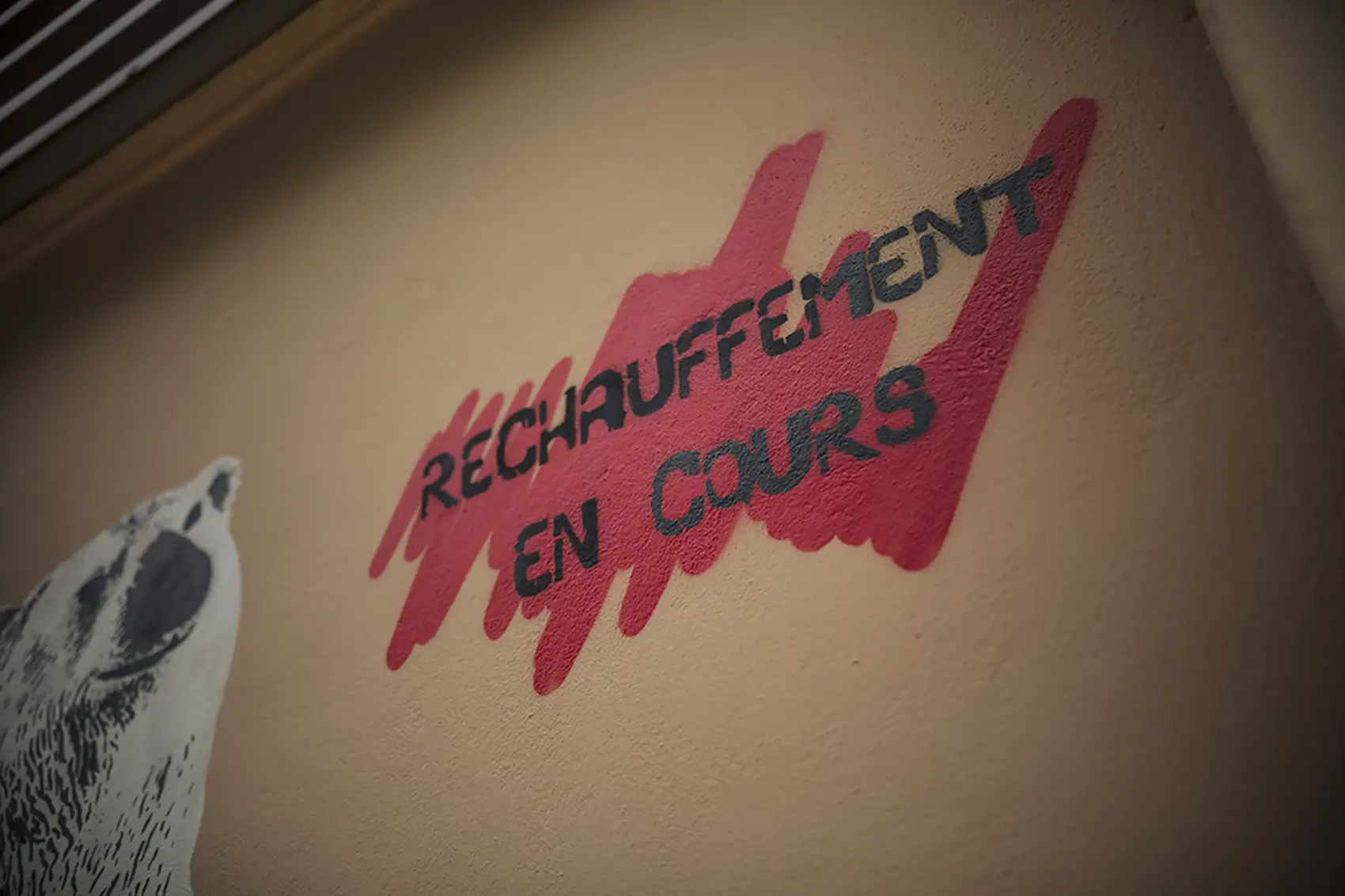
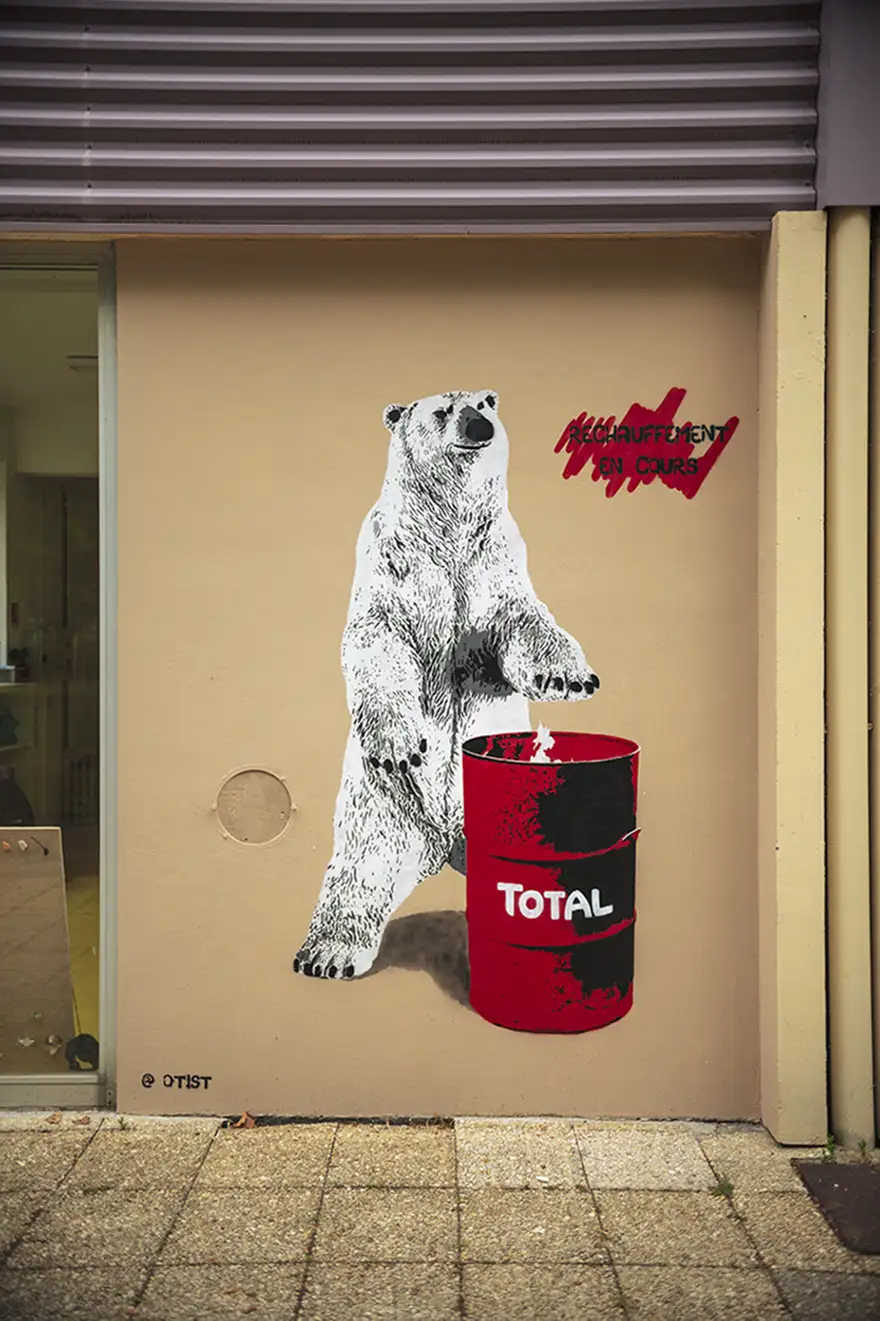
Le forage de pétrole en mer du Nord et la biodiversité ne font pas bon ménage… La pollution de notre écosystème va bientôt nous jouer des tours, même si nous gagnons un tout petit peu en confort aujourd’hui.
Pour Otist :
« Une investigation dans la revue scientifique Global Environmental Change a dévoilé des faits accablants sur le Groupe Total.
Au sein du magazine interne de l’entreprise, Total Information, au début des années 1970, on pouvait lire ces mots : “Si la consommation de charbon et de pétrole garde le même rythme dans les années à venir, la concentration de gaz carbonique pourrait atteindre 400 parties par million vers 2010.”
Il y a 50 ans donc, l’industrie pétrolière Total et Elf, avec laquelle elle a fusionné en 1999, savait.
Elle connaissait les enjeux climatiques liés à son activité et a été mise au courant plus en détail, au cours des années 1980, de la gravité de la situation à venir.
C’est alors qu’une stratégie de réaction a été mise en place par le géant français. Une politique de doute et de remise en cause de la parole scientifique a commencé à émerger, pour ne s’estomper qu’à la fin des années 1990, laissant place au pouvoir des lobbies puis au greenwashing.
Total continue de s’enferrer dans les énergies fossiles. La major prévoit d’en augmenter sa production de 15 % d’ici à 2030. Pour soutenir ce rythme, elle s’implique partout dans le monde dans des projets destructeurs de l’environnement, néfastes pour le climat et problématiques pour les populations locales. » (www.nationalgeographic.fr)
Drilling for oil in the North Sea and biodiversity do not go well together… The pollution of our ecosystem will soon come back to haunt us, even if we gain a tiny bit of comfort today.
According to Otist:
“An investigation in the scientific journal Global Environmental Change has revealed damning facts about the Total Group.
In the company’s internal magazine, Total Information, in the early 1970s, one could read these words: ‘If the consumption of coal and oil continues at the same pace in the coming years, the concentration of carbon dioxide could reach 400 parts per million by 2010.’
So 50 years ago, the oil industry Total and Elf, with which it merged in 1999, already knew.
It was aware of the climate issues linked to its activity and was informed in greater detail during the 1980s of the gravity of the situation to come.
It was then that a reaction strategy was put in place by the French giant. A policy of doubt and questioning of scientific discourse began to emerge, only fading at the end of the 1990s, giving way to the power of lobbies and then greenwashing.
Total continues to sink deeper into fossil fuels. The major plans to increase its production by 15% by 2030. To sustain this pace, it is involved all over the world in projects that are destructive to the environment, harmful to the climate and problematic for local populations.” (www.nationalgeographic.fr)